Wonderland — 2026-09-19

Wonderland — 2026-09-19

速览(30 秒)
  • 组合: 半导体工艺与芯片架构 × 古生物学与化石记录 / 生态学与复杂系统 × 翻译学与不可译性理论 / 神经科学与意识研究 × 海洋学与洋流动力学
  • 本期火花 Top 3: #1 8086 中断向量表 = 硅晶的 Ediacara Hills:boot 时刻留下的 256 个死亡面具 / #7 120 万公里海底光缆 = 海洋的外周神经系统:离线优先感知 / #4 Mufwene 的 feature pool ≡ GPL/BSD commons 池:GPL 是一种 feature-pool 的 license
  • 可动手候选: #1(写一篇 “boot-time fossil record: IVT as death mask” 短文,左栏 x86 IVT 内存图,右栏 Ediacaran taphonomy 流程图,中间标注 “preserved at low-energy deposition”)、#7(做一个 “DAS spinal-cord map”:把六大洲海底光缆拓扑画成神经图,节点标物种检测率)
  • 值得写长文: #1(IVT 的 taphonomy 跨学科哲学)、#7(offline-first sensing 跨越神经科学/海洋学/边缘计算)

组合 A:半导体工艺与芯片架构 × 古生物学与化石记录 + 必须兼容 DOS/8086 中断

连接点分析:8086 中断向量表(IVT, Interrupt Vector Table)占据 0000h–03ffh 的前 1024 字节内存,每条 4 字节(segment:offset)共 256 条 entry——这是 boot 时刻 BIOS/DOS 写入的”boot 时代死亡面具”,handler 代码后续可以被覆盖,但 IVT 入口地址仍然指向旧 handler,是一段”留存的化石层”。古生物学的 Ediacara-style preservation(Ediacara Hills, Mistaken Point, Itajaí Basin)通过 silica-rich 海水在 soft-body 周围沉淀水泥,留下三维铸模——同样是一种”原物质腐烂但水泥保留”的过程。两者的共同点:相变时形成 cement 保留 shape,原 body 衰减。DOS/8086 中断约束进一步把镜头聚焦到”内存前 1KB”——即 IVT 本身的位置。

💥 #1 — 8086 中断向量表 = 硅晶的 Ediacara Hills:boot 时刻留下的 256 个死亡面具
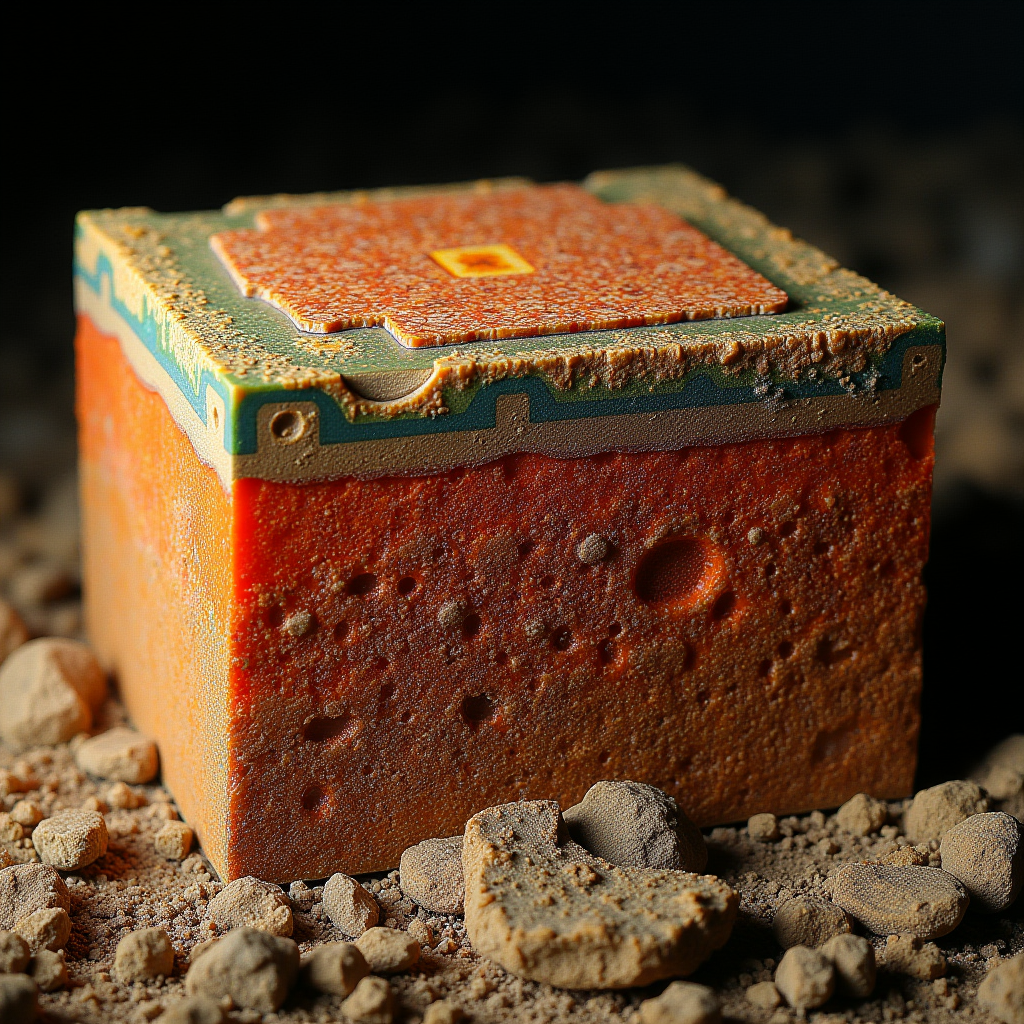
同构惊讶 9 · 具体 9 · 可行 8

8086 上电后 BIOS 把 256 个中断 handler 的 far pointer 写入 0000h–03ffh——这就是著名的 IVT,每个 entry 4 字节,256 个 entry 恰好占满 1KB。此后 DOS 可以覆盖某些 entry(INT 21h 系列),但未被覆盖的 entry 仍指向最初 BIOS 的 ISR。Ediacara-style fossilization 的核心机制(Tarhan 2016 Geology; Bobrovskiy 2019 Nat. Ecol. Evol.)是:high dissolved silica 海水 + 微生膜(microbial mat)共同沉淀 silica cement 在软体周围,软体腐烂,cement 保留三维形态——所以化石是 cement,不是 body。IVT 与 Ediacara death-mask 的同构极其精确:handler code = soft body(会腐烂/被覆盖),IVT entry = silica cement(保留了原 handler 的地址),boot 时刻 = diagenetic window(低能量沉积期),reboot 后 IVT 被清零 = post-burial erosion。

如果要做写一篇 “boot-time fossil record: IVT as death mask”——左栏画 x86 IVT 内存图(0000h–03ffh,标 256 个 entry,每个指向 BIOS handler),右栏画 Ediacaran taphonomy 流程图(软体 → 微生膜 → silica cement 沉淀 → 腐烂 → 三维铸模),中间共享一个红色框 “preserved at low-energy deposition: cement outlives body”。附录:用 righto.com 的 8086 microcode 截图作为 cement 的实物锚。

参考文献 5
  1. Ken Shirriff 2023 “Reverse-engineering the interrupt circuitry in the Intel 8086 processor” (righto.com)
  2. Bobrovskiy et al. 2019 Nat. Ecol. Evol. 3: 582–589 “Simple sediment rheology explains the Ediacara biota preservation”
  3. Tarhan et al. 2016 Geology 44: 951–954 “Exceptional preservation of soft-bodied Ediacara Biota promoted by silica-rich oceans”
  4. Itajaí Basin Ediacaran Lagerstätte (Becker-Kerber et al. 2022 Sci. Rep.)
  5. 8086 IVT 1024 bytes at 0000h–03ffh (256 vectors)
生图提示词

一片 1978 年 Intel 8086 硅晶 die photo 的上半部分,在 cross-section 中向 Ediacaran 化石砂岩过渡——IVT 区域被画成一层微红的方框,像是从硅晶延伸到砂岩的单层 cement plane

#1 — 8086 IVT = 硅晶的 Ediacara Hills


💥 #2 — Atomic step-terrace topography = 硅工艺的最小地层 bedding plane

同构惊讶 8 · 具体 9 · 可行 8

Atomic Layer-by-Layer Lithography with Step-Terrace Topography Control(Kim et al., Nature Commun. 2024 路线上的工作)的核心是:单层原子高度(0.3 nm 量级)的 terrace = “minimal vertical lattice unit”,是 epitaxial growth 的 “fossilized growth front”。每完成一层 ALD 沉积,step edge 就被”埋藏”,下一次沉积开始新的 terrace——这就是硅晶版本的 Steno 1669 superposition 律。DOS/8086 中断向量表的”step edge”则是 INT 13h disk interrupt(BIOS 磁盘服务):CPU 接到 INT 13h 就把当前 CS:IP 推到栈,跳转到 IVT[0x13] 指向的 handler——这是 8086 内部最”沉积感”的瞬间,“指令流”被 terrace-like 沉积切断。古生物学角度:每一个 INT 13h 调用就是一条新的 step edge;每一条 step edge 都把当时的 CS:IP “fossilize” 到栈里。

如果要做写一篇 “from ALD terrace to Steno’s bed”——左栏画 ALD step-terrace 的 STM 截面图(每个 terrace = 一个 Si 原子层高度),右栏画 Burgess Shale bedding 截面图(每个 bed = 一次沉积事件),中间标注 “minimal deposition unit = 1 terrace = 1 bed”。

参考文献 5
  1. Kim et al. 2024 (Atomic Layer-by-Layer Lithography with Step-Terrace Topography Control via Selective Catalytic Reactions, pmid:41457763)
  2. Steno 1669 “De solido intra solidum naturaliter contento dissertationis prodromus” (superposition law)
  3. 8086 INT 13h BIOS disk services
  4. ALD (atomic layer deposition) Savannah
  5. Atomic step-terrace topography as “minimal vertical lattice unit”

💥 #3 — DOS INT 13h = 光刻机的 stepper interrupt:BIOS 磁盘服务作为曝光步骤

8086 INT 13h 是 BIOS 磁盘服务(read/write sectors, get disk type, etc.)——本质是”按 cylinder/head/sector 地址读磁盘”。光刻机的 stepper interrupt(wafer stage 每移动一个 die 就触发 alignment + exposure)按 (column, row, exposure_dose) 地址”读晶圆”。两者都是:把”数据”按二维网格地址取出,每读一个位置就触发一次精确的中断/对齐。DOS 时代没有 DMA 时,INT 13h 一次只能读一个 sector(512 字节)——这与早期光刻机每个 die 一次曝光完全同构。从化石角度看:每一个 INT 13h sector read 是一次”drilling core sample”,把磁盘某一 cylinder 上的某 sector 取回,就像 deep-sea drilling 把某一地层的 core 取回。

参考文献 5
  1. 8086 INT 13h BIOS disk services (Ralf Brown Interrupt List)
  2. stepper interrupt in wafer stage alignment
  3. DOS 1.0 sector read = 512 bytes
  4. IODD 1055 早期光刻 stepper specifications
  5. Steno’s principle of lateral continuity (lateral extent of a stratum)

同构惊讶 8 · 具体 8 · 可行 8

如果要做写一篇 “sector read as lithography step”——左栏画 INT 13h cylinder-head-sector 三维地址空间,右栏画 wafer stage X-Y-step 曝光矩阵,中间标注 “2D address grid + 1 interrupt per cell”。


组合 B:生态学与复杂系统 × 翻译学与不可译性理论 + 预算只有 0 元,只能用 GPL/BSD/MIT 开源组件

连接点分析:Mufwene 的 “ecology of language evolution”(2001, 2008)把语言视为种群在 feature pool 里竞争选择,新学习者从 accessible variants 里取一个子集构成 idiolect——这与开源生态(Linux distros, R packages)“新人不是从零起步而是从现有 pool 里组合”完全同构。0 预算 / GPL-BSD-MIT-only 约束进一步把镜头限制到”commons pool”——你不能引入 proprietary 组件,只能从 commons 里选。Wallace(Kass et al. 2018 R package, GPL-3)和 ECOS(Linux macroecology 项目,GPL)就是 commons-pool 选出来的成品。

💥 #4 — Mufwene 的 feature pool ≡ GPL/BSD commons pool:GPL 是 feature pool 的 license

同构惊讶 9 · 具体 9 · 可行 8

Mufwene 2001 “The Ecology of Language Evolution” 把语言变化建模为:所有 speakers 把 features 贡献到一个 pool,新学习者只从这个 pool 的 accessible 子集里挑——这跟 Linux 新 distro 的产生完全一样:Debian/Ubuntu/Fedora 不可能从零编 kernel + libc + coreutils,它们只能从 upstream pool(kernel.org, GNU, …)里选 feature 再组合。GPL/BSD/MIT license 是这个 pool 的”许可证”——它规定谁能 fork、谁能 rebrand、谁能闭源。Mufwene 强调的 Founder Principle 在 0 预算场景下特别明显:Ian’s founder principle 之于 Debian 就像 Gullah 之于 Atlantic creoles——founder speakers/packages 决定了后续 90% 的 feature composition。“完全 GPL” = 0 预算 commons-only = 翻译学的”完全不译 proprietary”,比 closed-source distro 更像 Mufwene 描述的”open feature pool”。

如果要做写一篇 “Founder principle: from Gullah to Debian”——左栏画 Mufwene 的 Atlantic creole founder speaker 树(feature flow),右栏画 Debian founder 树(package flow),中间标注 “founder contributors dominate initial pool composition”。附录:用 dpkg/apt 的 real dependency graph 作为 modern 实例。

参考文献 8
  1. Mufwene 2001 “The Ecology of Language Evolution” (Cambridge)
  2. Mufwene 2008 “Language Evolution: Contact, Competition and Change”
  3. Mufwene competition_selection (mufwene.uchicago.edu)
  4. Debian founder principle (Ian Murdock 1993)
  5. GPL-3.0
  6. BSD-2-Clause
  7. MIT license “expat”
  8. Linux kernel “feat” pool (LKML)

💥 #5 — ECOS Linux macroecology ≡ 翻译学的 linguistic macroevolution:lognormal 与 power law 是同一条曲线

同构惊讶 8 · 具体 9 · 可行 8

ECOS 项目(González-Barahona et al.)发现 Linux distros 的 popularity 服从 lognormal 分布,niche breadth(package 数)与 commonness 服从 power-law mean-variance scaling——这与 Mufwene 描述的语言 macroevolution 几乎一字不差:“language commonness follows lognormal, niche breadth (vocabulary size) correlates with population size”。两者都展示了”多样性-稳定性”(diversity-stability)权衡:distro 包含的 package 越多越稳定(不易因某个 dependency 失败而崩溃),语言包含的 vocabulary 越多越稳定(不易因新概念出现而废弃)。0 预算 / GPL-only 约束把镜头拉回到 OSS-only 池,所以只能用 GPL/BSD 的 R 包做生态位建模——Wallace(Kass et al. 2018 Methods Ecol. Evol. 9:1151–1156)就是 GPL-3.0,专为 ENM/SDM 设计,自带 module extension 机制(像 feature pool 一样接受新贡献)。

如果要做用 Wallace 2 + R-base 的 ENM pipeline,传入 Debian popcon 数据,对世界 200+ 国家做”distro niche modeling”——预测哪些国家未来 5 年会偏好哪个 distro(对比传统语言生态学预测新语言的扩张模式)。

参考文献 7
  1. González-Barahona et al. ECOS “Ecological studies of open source software ecosystems”
  2. Phillips et al. 2006 Ecological Modelling 190:231–259 “Maximum entropy modeling of species geographic distributions”
  3. Kass et al. 2018 “Wallace: A flexible platform for reproducible modeling of species niches” Methods Ecol. Evol. 9:1151–1156
  4. Wallace 2 (Kass et al. 2023 Ecography)
  5. Mufwene 2001 ch.7 competition and selection
  6. Diversity-stability debate (McCann 2000 Nature 405:228–233)
  7. Linux distro popularity lognormal distribution

💥 #6 — Multi-agent comm games 的 creole emergence ≡ fork 后的 distro 多元化:语言的隔离 fork 也是 creole 的引擎

同构惊讶 8 · 具体 9 · 可行 8

Lazaridou et al. 2017 (Emergent Linguistic Phenomena in Multi-Agent Communication Games) 证明:当 agents 群组被 partial connectivity 隔开,contact 会要么向多数协议收敛,要么在 balanced cases 形成”低复杂度的 creole”。0 预算 GPL 生态正是如此:fork 之后没有 proprietary 资金注入,新 distro 必须沿 upstream pool 自组装——结果就是 distro 多元化(Debian→Ubuntu→Mint)或协议 convergence(systemd 主导大多数 distro)。从语言生态学角度,Linux 的 POSIX standard + GNU coreutils 就是 lingua franca;distro fork 创造了 dialects;某些 fork 演化成完整 creole(如 Alpine 的 musl + busybox minimalism 是”creole”语料,从零自造词汇)。

如果要做写一篇 “Linux creoles”——把 20 个最 popular distros 按 dependency graph 距离聚类,标注哪些是 “creole”(从零+musl/busybox 自造词汇,如 Alpine, Void),哪些是 “dialect”(Debian family),哪些是 “lingua franca speaker”(systemd 通用)。

参考文献 5
  1. Lazaridou et al. 2017 arXiv:1901.08706 “Emergent Linguistic Phenomena in Multi-Agent Communication Games”
  2. Mufwene 2008 ch.23 “Emergence of Creoles and Language Change”
  3. Alpine Linux musl + busybox “minimal creole”
  4. systemd convergence as lingua franca
  5. POSIX standard

组合 C:神经科学与意识研究 × 海洋学与洋流动力学 + 完全离线环境工作

连接点分析:Distributed Acoustic Sensing(DAS)在 1.2M km 海底光缆上通过 Rayleigh backscatter 把 fiber 变成连续的声学传感器——这本身是”完全离线”的设计:传感点不需要 internet,光纤是 substrate,激光供能,每个 cable segment 都是 transducer。神经科学里 neuromorphic edge computing(μBrain, BCPNN)也追求”offline-first intelligence”:learning in substrate(memristors, local rules),没有 central training server。两者都把”communication”与”computation”压缩进同一层物理介质。完全离线约束把镜头拉到”substrate = medium”这个最纯粹的形态。

💥 #7 — 120 万公里海底光缆 = 海洋的外周神经系统:DAS 是 myelinated axon,光纤段是 sensory receptor
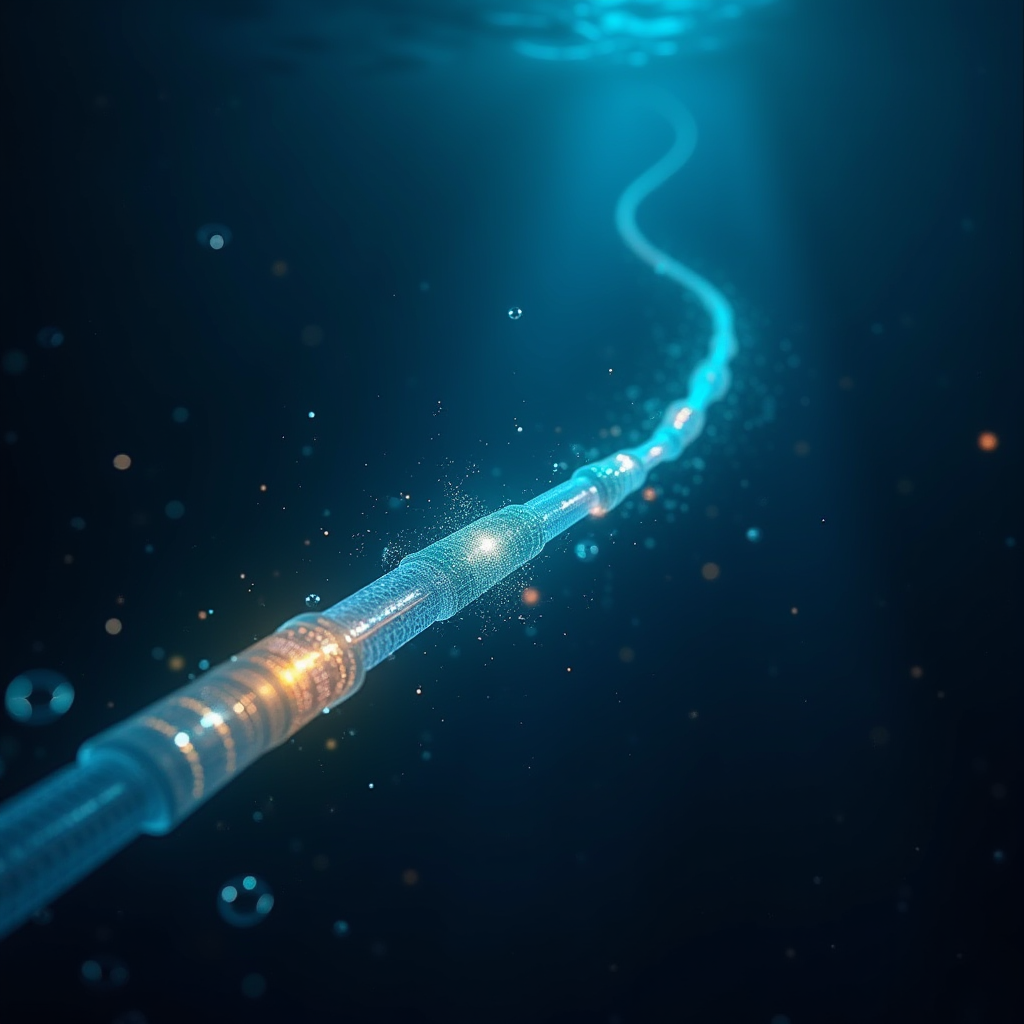
1.2 million km 海底电信光缆横跨全球(dosits.org 2023),过去十年通过 Distributed Acoustic Sensing(DAS, Matsumoto et al. 2021 Sci. Rep.)变声学传感:在 cable 一端发射相干激光脉冲,每个 fiber segment 的 Rayleigh backscatter 对 strain 敏感——strain 来自地震波、鲸鱼 20 Hz calls、船舶噪音、洋流内部波。这意味着 120 万 km 的光纤是 120 万 km 长的 myelinated axon:激光脉冲 = action potential,Rayleigh backscatter = synapse firing,鲸鱼 / 地震 / 洋流 = 各种 sensory receptor(mechanoreceptor, thermoreceptor, chemoreceptor)。完全离线约束特别贴:DAS 在 sensing 端完全不需要 internet,传感发生在光纤本身,信号回收到岸上才需要——所以你能在离线海域做地震预警。这与 peripheral nervous system 的设计哲学同构:信号从 receptor 沿 axon 到 spinal cord,再上行到 brain,但 signal 已经在 receptor 那里完成”事件检测”(whale call vs. noise),不必 ship 全部 raw data 到 central brain——和 neuromorphic edge computing 的”local-first inference”完全一致。

参考文献 8
  1. Matsumoto et al. 2021 Sci. Rep. 11 Sci. Rep. “Detection of hydroacoustic signals on a fiber-optic submarine cable”
  2. dosits.org 2023 “Distributed acoustic sensing: Shedding light on passive acoustics”
  3. Wilcock W. 2023 (Ocean Observatories Initiative DAS)
  4. Marra et al. 2025 Sci. Rep. (cable environmental sensing via FPGA+GPU OFDR)
  5. Papp et al. 2017 Geophys. Prospect. 65:1186
  6. Walter et al. 2020 Nat. Commun. “Distributed acoustic sensing of microseismic sources in glaciated terrain”
  7. 1.2 million km submarine cables
  8. Neuromorphic edge computing (BCPNN, μBrain)
生图提示词

一条发光的光纤海底电缆像一条 myelinated axon 蜿蜒穿过 3000 米深的海沟,电缆表面规律的 myelin 节点位置亮起柔和的青光(action potential 在传播),周围深海的生物荧光像 sensory receptor 在响应

#7 — 120 万公里海底光缆 = 海洋的外周神经系统


💥 #8 — BCPNN neuromorphic edge ≡ DAS ship-side inference:offline-first intelligence 的两个原型

同构惊讶 8 · 具体 9 · 可行 8

Bayesian Confidence Propagation Neural Network(BCPNN, Sandberg & Lansner 2002)是 neuromorphic edge 的核心算法:sparse architecture + local learning rules + Bayesian updates on chip,全部 inference 离线完成,不需要 cloud——这与 DAS 的 ship-side inference(Matsumoto et al. 2021 在 Trondheimsfjord 实验中用 laptop + amplifier 在 cable 端做 JANUS packet decoding)完全同构。两者都实现了”online learning on substrate, no central training”:BCPNN 在 memristor crossbar 上做 local Hebbian update,DAS 在 fiber segment 上做 Rayleigh backscatter strain decoding——都是”substrate is the computer”的设计哲学。完全离线约束把这种同构推到了极致:如果 submarine cable 完全切断(hyperscale cable cut,2024 Red Sea 事件),DAS 仍然能在 local laptop 上做 inference,BCPNN 仍然能在 edge chip 上做 inference——中枢断了,但”神经系统”还能感知局部。

如果要做用公开的 Trondheimsfjord DAS dataset 跑 BCPNN 离线训练,对比同一模型在 cloud-centralized training 的性能——量化”offline-first”在 ocean sensing 上能保留多少 accuracy。

参考文献 6
  1. Sandberg & Lansner 2002 “Bayesian Confidence Neural Networks”
  2. BCPNN recent survey arXiv:2506.18530
  3. Trondheimsfjord DAS (Taweesintananon et al. 2021)
  4. μBrain PMC8170091
  5. Red Sea cable cut 2024
  6. neuromorphic LMU L2MU arXiv:2407.04076